Insurance for a cleaning or restoration company has to cover the damage, injuries and contamination that can happen while you are working inside someone else’s property, which means more than a standard general liability policy, because that policy excludes much of what this work involves. Most companies need general liability, pollution and mold coverage, workers’ compensation, commercial auto, equipment coverage, and a janitorial bond or client crime coverage.
Cleaning and restoration crews spend their days in other people’s homes and buildings, often after something has already gone wrong. They run truck-mounted equipment, use chemicals, dry out wet structures, and tear out moldy materials. A standard general liability policy excludes several of those exposures by design. The company that shows up to fix a water loss can end up owning the next claim. Avanti Group reviews contractor programs line by line in the Business Risk Diagnostic™.
- What insurance does a cleaning or restoration company need?
- Why isn’t general liability enough for cleaning and restoration work?
- Does general liability cover mold for a restoration company?
- Do mold inspections and air quality testing need professional liability?
- How do you insure drying equipment and truck mounts?
- What about customer property you take back to your shop?
- Do cleaning companies need a janitorial bond?
- What workers’ comp and auto coverage does a cleaning company need?
- What do property managers and general contractors require?
- Is your cleaning or restoration program built for the work you do?
- Frequently asked questions
What insurance does a cleaning or restoration company need?
A cleaning or restoration company’s insurance program is the set of policies that protects the business from injuries, damage, contamination, theft and vehicle losses tied to working on other people’s property.
The core pieces for most companies:
- General liability, for injuries and property damage to others.
- Contractors pollution liability with mold coverage, for contamination the general liability policy excludes.
- Professional liability, if you inspect, test or write remediation plans.
- Workers’ compensation, for your crews.
- Commercial auto, for vans, trucks and trailers.
- Inland marine, for portable equipment.
- Bailee’s customers coverage, for customer items in your care.
- A janitorial bond or third-party crime coverage, for theft by employees from clients.
- Umbrella liability, above all of it.
Not every company needs every line. A carpet cleaning business and a mold remediation company carry very different risks. Our business insurance hub covers the basics, and our contractors insurance page covers the trade side.
Why isn’t general liability enough for cleaning and restoration work?
General liability insurance covers bodily injury and property damage to others, but it excludes damage to the specific part of a property you are working on, and most policies exclude pollution and mold.
That first exclusion matters every day in this trade. If a crew’s machine stains a hardwood floor they were hired to clean, or a drying setup warps the cabinets they were drying, the damage is to the property you were working on. Standard general liability often does not pay for it.
Our article on damage to property in your care, custody, or control explains these exclusions and how to close them.
Slip-and-fall claims are the other common exposure. Wet floors, cords from air movers, and hoses run through hallways all create trip hazards for occupants, tenants and the public. General liability is built for those claims, as long as the limits are high enough.
Does general liability cover mold for a restoration company?
Usually not. Most general liability policies include a pollution exclusion, and many add a fungi or bacteria exclusion that removes mold claims entirely, including for contractors whose job is removing mold.
That leaves restoration companies exposed in the work they are hired for:
- A customer says your water mitigation left moisture behind and mold grew later.
- An occupant says your remediation spread spores into other rooms.
- A sewage backup job exposes a family or employees to contaminated water.
Contractors pollution liability, often called CPL, is a policy that covers bodily injury, property damage and cleanup costs caused by pollutants released during your work, and restoration companies typically buy it with mold coverage included.
Read the policy’s definition of pollutants and its mold wording carefully. Some cover mold fully. Some sublimit it to a small amount. Some exclude it unless you add it back.
Do mold inspections and air quality testing need professional liability?
Yes, in most cases. Professional liability covers claims that your advice, testing or report was wrong, which a general liability or pollution policy may not cover.
If your company inspects for mold, runs indoor air quality tests, writes remediation protocols or performs clearance testing, the risk is the opinion as much as the work.
A missed reading, a report that clears a space too early, or a protocol that leaves contamination behind can all lead to claims with no physical accident at all.
Many carriers offer CPL and professional liability together on one policy for environmental and restoration contractors. That avoids gaps between two separate policies arguing over which one applies.
How do you insure drying equipment and truck mounts?
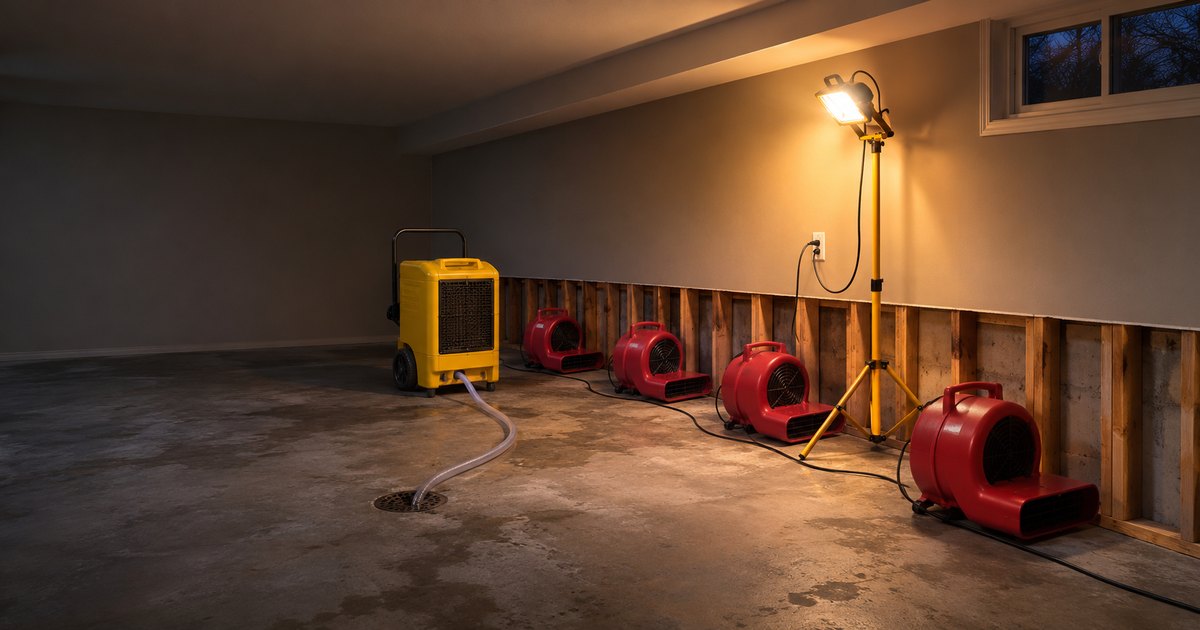
Inland marine insurance, sometimes called contractor’s equipment coverage, covers tools and equipment that move from job to job, including gear left running at a customer’s property.
Restoration and cleaning companies carry a lot of it:
- Dehumidifiers, air movers and air scrubbers.
- Moisture meters and thermal imaging cameras.
- Extractors, floor machines and portable units.
- Truck-mounted carpet cleaning systems.
A standard commercial property policy is built for your building and what is inside it. Equipment sitting at a job site for days is exposed to theft, water and damage, and needs coverage that follows it. Schedule high-value items, and check how a truck-mounted unit is insured, since it can fall between the auto policy and the equipment policy.
What about customer property you take back to your shop?
Bailee’s customers insurance covers customers’ property while it is in your care at your facility or in transit, such as rugs, upholstery and contents packed out after a loss.
Rug cleaning and contents restoration put other people’s belongings in your warehouse. Your own commercial property policy usually covers your property, not theirs, and your general liability excludes property in your care.
A fire or water loss at your shop can damage your building, your equipment and a warehouse full of customers’ items at the same time. Our article on business income and extra expense covers the downtime side of that loss.
Do cleaning companies need a janitorial bond?
A janitorial bond, also called a janitorial service bond, pays a client back if one of your employees steals from them, and many commercial clients ask for one before signing a cleaning contract.
Despite the name, most janitorial bonds work like a narrow form of crime insurance. Many companies outgrow the bond and move to a commercial crime policy with third-party or client coverage, which protects clients’ property and can carry higher limits.
Neither one covers theft by someone who is not your employee, and many require a conviction or clear proof before paying. Our article on crime, employee dishonesty and social engineering explains how these coverages differ.
What workers’ comp and auto coverage does a cleaning company need?
Workers’ compensation covers employee injuries, and cleaning and restoration crews face lifting, ladders, slips, chemicals and contaminated water every week.
Two things drive cost and coverage in this trade:
- Class codes. Janitorial work, carpet cleaning and restoration or construction-type work are often classified differently. If a crew moves between them, payroll needs to be split correctly, or an audit will do it for you. Our article on workers comp for contractors covers class codes and subcontractors.
- Subcontractors. Uninsured subs can end up on your audit.
Commercial auto covers the vans and trucks your crews drive, often with expensive equipment built in. If employees drive their own cars to jobs or to pick up supplies, add hired and non-owned auto coverage.
Many restoration jobs are emergencies, driven at night in bad weather. Iowa knows that pattern well. The National Weather Service in Des Moines estimated the August 2020 derecho at over $11 billion in damage, the costliest thunderstorm event in U.S. history. Storm surges are when crews, vehicles and equipment are stretched thinnest.
What do property managers and general contractors require?
Commercial clients usually require proof of insurance before you start, and their contracts often ask for specific limits, additional insured status, and a waiver of subrogation.
Before signing, check that your policies actually match what the contract asks for. Our article on additional insured certificates explains what you are granting.
Large commercial and multi-family accounts often ask for limits higher than a primary policy provides. An umbrella is the usual answer. Our guide to how much commercial umbrella coverage to carry walks through sizing.
Is your cleaning or restoration program built for the work you do?
Restoration companies are the first call after a loss.
Avanti’s Rich Bales describes the order he follows when a client calls about a water loss: safety first, then stop the damage. In his words: “If it’s a water loss, we want a restoration company out there and a plumber.”
That puts restoration crews in the middle of someone else’s worst day, with water, mold, chemicals and a houseful of belongings.
Insurance is just risk tolerance. You can carry mold, equipment and customer-property risk on purpose. Too many companies are carrying it by accident.
Clarity before coverage.
Next step: Write down every service your company offers, from carpet cleaning to mold remediation. Next to each one, write which policy you believe covers a claim from that work. Then check your general liability policy for pollution and fungi or bacteria exclusions. Any service with a blank next to it, or an exclusion against it, is a gap.
Don’t want to do this yourself? Let us help. Start with the Business Risk Diagnostic™, or meet the Avanti team.
Prefer to skip the call? You can also start a business insurance quote online and we’ll follow up.
Frequently asked questions
What insurance does a cleaning business need?
Most cleaning businesses need general liability, workers’ compensation if they have employees, commercial auto for work vehicles, coverage for their equipment, and a janitorial bond or client crime coverage. Companies that do water, fire or mold restoration also need contractors pollution liability with mold coverage.
Does general liability insurance cover mold remediation?
Usually not. Most general liability policies exclude pollution, and many add a fungi or bacteria exclusion. Restoration and remediation companies typically need a contractors pollution liability policy that specifically includes mold.
What is a janitorial bond?
A janitorial bond reimburses a client if one of your employees steals from them while working at their property. Many commercial clients ask for one. Growing companies often replace it with a commercial crime policy that includes client coverage and higher limits.
Who pays if my crew damages a customer’s floor while cleaning it?
It depends on your policy. Standard general liability often excludes damage to the specific part of a property you were working on. Some policies can be endorsed to cover it, and some companies buy separate coverage for customer property. Check your policy before a claim, not after.
Is restoration equipment covered by my commercial property policy?
Often only while it is at your own location. Equipment that travels to job sites, such as dehumidifiers, air movers and moisture meters, usually needs inland marine or contractor’s equipment coverage that follows it from job to job.