
Mobile and manufactured home insurance is a policy written on a form built for factory-built homes, and how the home is anchored, how old it is, and how the policy treats wind and hail decide what a claim actually pays.
Avanti Group sees owners of manufactured homes assume they are buying the same policy a site-built homeowner buys, when the form, the underwriting rules, and the wind terms can be quite different. This article explains the form, why tie-downs matter, and how wind and hail deductibles work. The Residential Risk Audit™ is how Avanti checks that your policy matches the home as it actually stands.
How is mobile and manufactured home insurance different from a standard homeowners policy?
Mobile and manufactured home insurance uses a policy form written for factory-built homes, and carriers often apply their own rules on the home’s age, foundation, and anchoring before they will offer coverage.
Many carriers write manufactured homes on a dedicated mobile home form instead of a standard homeowners form. The names and terms vary, so the form listed on your declarations page matters. Underwriting questions are also different. Carriers commonly ask when the home was built, how it is set, and whether it sits on land you own or in a park.
Our mobile and manufactured home insurance page covers what we place, and the broader personal insurance hub shows how this coverage fits with the rest of a household’s protection.
Why do tie-downs matter for wind coverage?
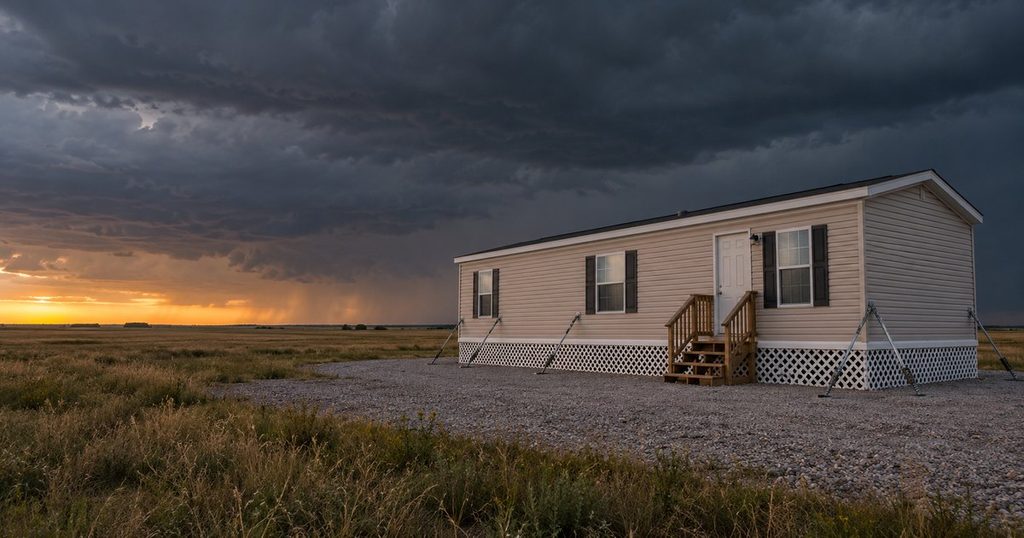
A tie-down is the anchoring system that secures a manufactured home to the ground, and carriers can look at it when deciding whether to offer wind coverage and on what terms.
Wind is the exposure that separates manufactured homes from most other homes. A light structure on piers, held by straps and ground anchors, behaves differently in a storm than a home on a permanent foundation. That is why underwriters ask how the home is anchored and set.
Terms differ by carrier, so ask directly: what anchoring does the carrier require, does it inspect or ask for proof, and what happens to wind coverage if the anchoring does not meet its standard. The answer lives in the application and the policy form, not in a quick read of the quote.
How do wind and hail deductibles work on a manufactured home?
A wind and hail deductible is the amount you pay before the policy responds to a wind or hail loss, and on some policies it is a percentage of the insured value instead of a flat dollar amount.
Wind and hail shifted over the Midwest, and many owners found out after a storm that their roof was not fully covered or that their deductible was higher than they expected. That is the pattern behind a lot of the claims conversations we have.
Insurance is just risk tolerance. You can keep a wind deductible on purpose. Most owners are keeping it by accident.
Ask for the wind and hail deductible as an exact dollar figure on your home. If the policy uses a percentage, multiply it out and decide whether you could pay that number tomorrow. Also ask whether the roof is paid at replacement cost or at actual cash value, because the difference can be large on an older home.
Cheap insurance is expensive when the savings come from a deductible or a settlement basis that does not fit the home. Might not be true on day one. After a claim, that is when it really shows.
What does a manufactured home policy usually cover?
A manufactured home policy usually covers the home itself, other structures such as a shed or carport, your personal belongings, personal liability, and loss of use, with limits and exclusions that vary by carrier.
- The home. Check whether it is paid at replacement cost or actual cash value, particularly on an older home.
- Other structures. Sheds, decks, and carports often sit under a separate limit.
- Personal property. Belongings carry their own limit.
- Liability. Responds if a guest is hurt or you damage someone else’s property.
- Loss of use. Helps with living costs while a covered loss is repaired.
If the home sits in a park, you typically insure the home and your belongings, and the park owner insures the land and common areas. Confirm that split in your lease instead of assuming it.
What does a manufactured home policy not cover?
Flood is usually excluded from a standard manufactured home policy, and some losses, such as certain water damage or very old roofs, can be limited or excluded unless you add coverage or meet the carrier’s conditions.
Flood is a separate question, and our piece on Iowa flood maps and what they mean for your premium explains why. If the home sits empty for part of the year, read our article on specialty dwelling insurance for vacant and seasonal homes, because vacancy clauses can matter.
For a household-level checklist, start with what most home and auto reviews miss.
What should you check on your own policy this month?
Compare four things: the form name, the anchoring requirements, the wind and hail deductible in dollars, and the roof and home settlement basis.
- Form. Find the form name on your declarations page.
- Anchoring. Ask what the carrier requires and whether your home meets it.
- Wind and hail deductible. Write down the dollar figure.
- Settlement basis. Replacement cost or actual cash value, for the home and the roof.
- Liability. Ask whether an umbrella fits your situation.
- Life changed? A purchase, a move, or a new setup are life events that should trigger a call to your agent.
How does Avanti review a manufactured home owner’s coverage?
The Residential Risk Audit™ is Avanti’s structured personal-lines review, and for a manufactured home it checks the form, the anchoring conditions, and the wind terms against how the home is actually set and used.
We will be more diligent on the front end, and there will likely be more questions than you have been asked before. That is so that after a claim, you won’t hate us.
Know your wind number before the storm
The form, the anchoring, and the wind deductible decide what a storm claim pays.
Next step: Pull your declarations page this week and write down the wind and hail deductible as a dollar amount. If you could not pay that number tomorrow, call your agent.
Don’t want to do this yourself? Let us help. Start with the Residential Risk Audit™, or meet the Avanti team.
Frequently asked questions
Is mobile home insurance different from homeowners insurance?
Often, yes. Many carriers write manufactured homes on a dedicated form with its own underwriting rules on age, foundation, and anchoring. Check the form name on your declarations page.
Do tie-downs affect my insurance?
They can. Carriers commonly ask how a manufactured home is anchored when deciding whether to offer wind coverage and on what terms. Ask your agent what your carrier requires.
What is a wind and hail deductible?
It is the amount you pay before the policy responds to a wind or hail loss. On some policies it is a percentage of the insured value, so convert it to a dollar figure and confirm you could pay it.
Does manufactured home insurance cover flood?
A standard policy usually does not. Flood is typically a separate policy, so ask your agent about it if your home is in a low-lying area.
Do I need my own policy if my home is in a mobile home park?
Usually yes. The park owner insures the land and common areas, and you insure your home, your belongings, and your liability. Confirm the split in your lease.