
NEMT insurance is hard to place because three coverages that normally come bundled, auto, general liability, and abuse and molestation, each have their own problem when the passenger is elderly or disabled and the driver is alone with them.
A new NEMT operator usually learns this after the quote arrives, not before. This article walks through what the market looks for, where the coverage gaps tend to hide, and what to settle before you sign a contract or hire a driver. The Business Risk Diagnostic™ is where we map those gaps before any market sees the file.
What is NEMT insurance?
NEMT insurance is the combined commercial insurance program for businesses that drive people to dialysis, therapy, clinics, and hospital discharges: commercial auto, general liability, and, in practice, abuse and molestation coverage.
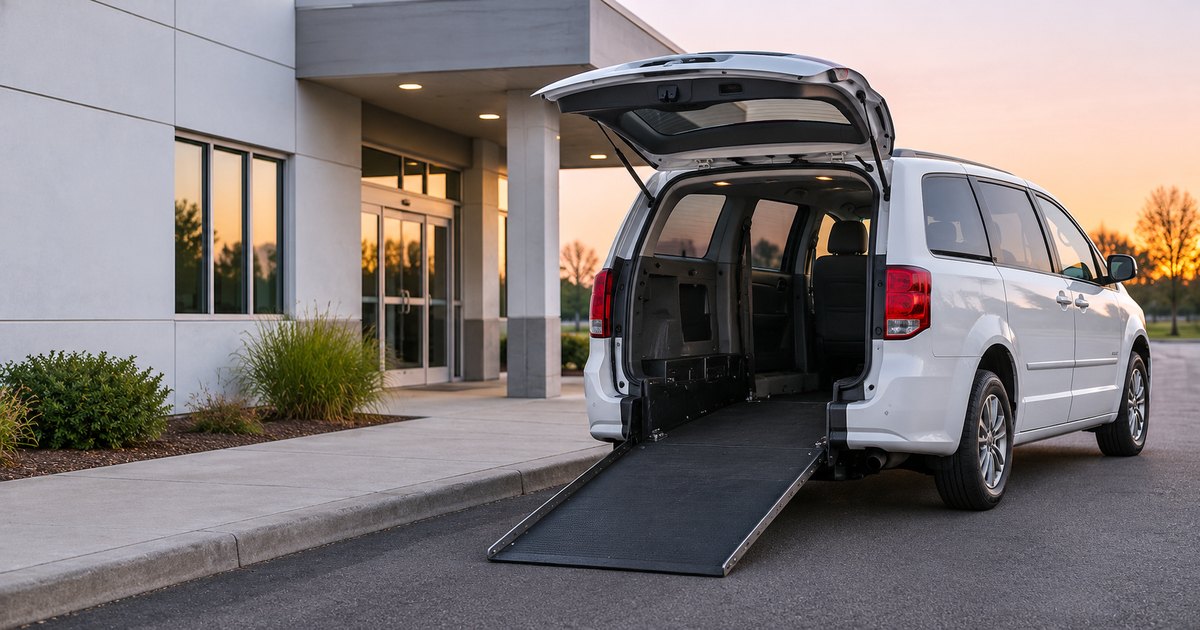
NEMT stands for non-emergency medical transportation. No ambulance, no stretcher, no lights. A van, often with a wheelchair lift and tie-downs, and a driver.
It looks like a small business. Insurers do not treat it like one. Public guides from NEMT insurance agencies describe the same three-part package, and ride vendors and medical groups commonly require all three.
Why is NEMT harder to insure than a regular business?
It is harder because the insurer is covering a for-hire passenger vehicle and a vulnerable passenger at the same time, and many markets will not take either risk without the other being tidy.
A plumber with a van is one exposure. An NEMT operator has several at once.
- For-hire passengers. This is not a delivery van. Every trip puts a person in the vehicle who cannot easily protect themselves.
- Specialized vehicles. Lifts and securement systems are the reason the vehicle is classified and priced the way it is. If an underwriter hears the vans are ordinary minivans, the file gets confusing fast.
- Young businesses. Many operators are new, with few years of loss history to show.
- Regulatory paper. Federal and state registrations, driver counts, and entity names all get checked against public records.
That last point catches people. An application is a signed document. If it says one thing and a public database says another, the underwriter notices, and it costs the account time it often does not have.
Why is abuse and molestation coverage the hardest part?
Abuse and molestation coverage is the hardest part because the claim does not need to be true to cost money, and the market has been pulling back from the exposure.
Your driver is alone with an elderly or disabled passenger. An allegation in that setting gets filed against the company, true or not. Defense costs come first, before anyone looks at the merits.
Industry reporting backs up the trend. In a trade article produced with Amwins, a wholesale broker said reinsurers have been hesitant to support abuse coverage, that full limits are scarce, and that carriers often build coverage in small layers. The same piece notes underwriters now expect documented controls such as background checks, training, and written procedures. The source is a broker, so read it as the market’s view, not as a neutral study.
On the accounts we see, the practical result is a sublimit. The general liability policy may cover abuse, but only up to a small amount per claim and in total. That is a very different thing from the full liability limit printed on the front page.
What are the coverage gaps NEMT operators miss?
The gaps that matter most are a low abuse sublimit, an excess policy that sits above the wrong number, an exclusion for contracted drivers, and contract language that outruns the policy.
- A small abuse sublimit. Read the form. The number on the declarations page for general liability is not the number for abuse.
- Excess that does not sit above the sublimit. An umbrella or excess policy generally follows the underlying limit, not the sublimit. It may add nothing where you most need it.
- Professional liability that excludes abuse. Some professional liability forms exclude it outright, which leaves the sublimit as the only protection.
- Contracted-driver exclusions. Some liability forms exclude work performed by contracted or non-employee persons. A policy can look fine until the first 1099 driver takes a passenger.
- Contract requirements. A broker or facility may require specific limits, including abuse and molestation. If the contract demands more than the policy delivers, you can be in breach on day one.
We have seen versions of every one of these on real NEMT files. Names stay out of it, but the pattern is consistent.
Can you use 1099 drivers in an NEMT business?
You can structure it that way, but many liability forms will not respond to contractor drivers, and a driver working your schedule in your van for an hourly rate may be treated as an employee anyway.
Two problems stack up. The liability policy may exclude contracted persons. And separately, a state may look past the 1099 label for workers compensation purposes. If so, the payroll can land on you at audit.
We cannot tell you how your state will classify your drivers. That is a legal question and worth asking before anyone is hired. What we can tell you is that the insurance answer should come first, not after.
What should you do before you buy NEMT insurance?
Before you buy, get the contract’s insurance requirements in writing, decide how drivers will be engaged, gather photos of the vehicles, and write down your screening and safety procedures.
- Get the insurance section of any service agreement before you sign it.
- Decide employee or contractor for each driver, and ask about the insurance consequence first.
- Photograph every vehicle, interior and exterior, with the lift and tie-downs visible.
- Write down background-check, training, loading, tie-down, and incident procedures, even if the first draft is one page.
- Make sure every registration and entity name matches across your applications and public records.
None of that is exciting. All of it is what an underwriter reads to decide whether to offer real abuse coverage, or a sublimit and a shrug.
Next step: Pull the insurance section of your next contract, or your current policy’s abuse and molestation sublimit, and put it next to what you believe you are covered for.
Don’t want to do this yourself? Let us help. Start with the Business Risk Diagnostic™, or meet the Avanti team.
Frequently asked questions
What insurance does an NEMT business need?
Most NEMT operators need commercial auto, general liability, and abuse and molestation coverage, plus workers compensation if they have employees. Ride vendors and facilities often set the required limits by contract.
Is abuse and molestation coverage included in general liability?
Sometimes, but often only as a small sublimit. Check the form for the per-claim and aggregate amounts, and confirm whether physical abuse is covered or only sexual abuse.
Can NEMT drivers be 1099 independent contractors?
Some liability forms exclude contracted persons, and a state may treat the driver as an employee regardless of the label. Ask both the insurance question and the employment-classification question before hiring.
Why was my NEMT insurance quote higher than expected?
Passenger transport, specialized vehicles, a short operating history, and limited abuse coverage capacity all push pricing up. Location, radius, and driver records also matter.
How long does it take to get NEMT insurance?
One NEMT agency suggests at least 7 to 10 business days once all information is submitted. Harder accounts placed through wholesale markets can take longer.