
Bobtail insurance covers an owner-operator’s liability while driving a tractor with no trailer on work trips, non-trucking liability covers personal use when the truck is off dispatch, and the motor carrier’s policy usually covers the rest, so the answer for any single trip depends on dispatch status and on the exact policy wording.
Here is the part owners miss: the two terms are used inconsistently in the industry, so two policies with the same label can respond to different trips. This article lays out which policy typically responds in which situation, what the lease has to say about it, and what to check before you sign. The Business Risk Diagnostic™ is how Avanti maps those gaps before a market sees the file.
What is bobtail insurance?
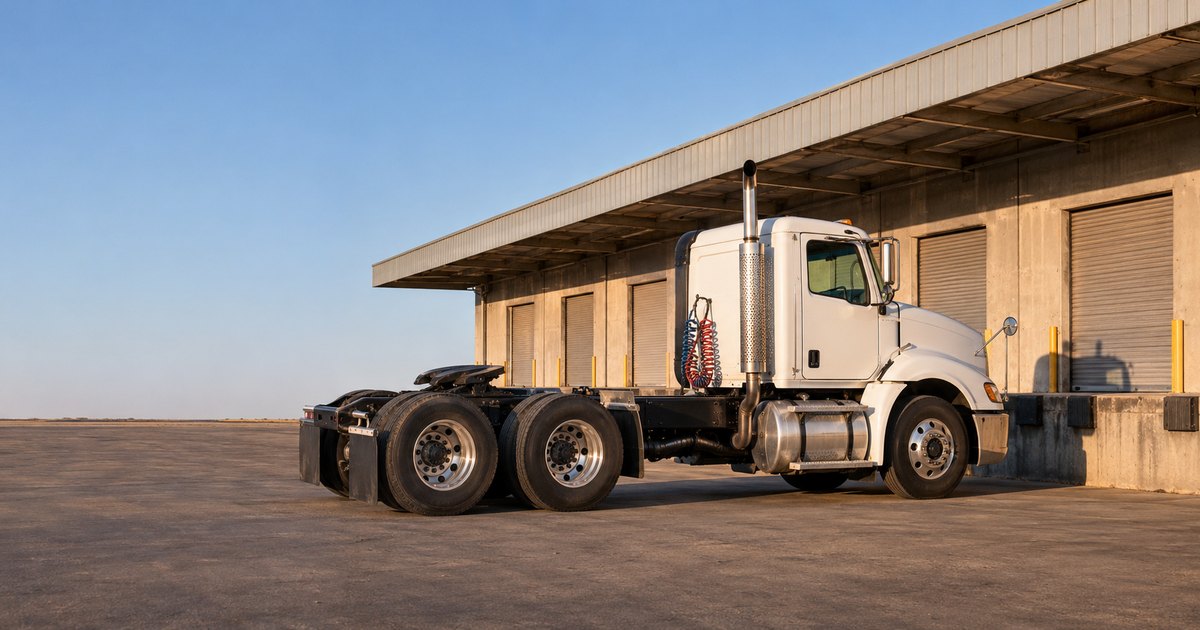
Bobtail insurance is a liability policy that covers an owner-operator for injury and property damage to others while the tractor is driven without a trailer attached, usually on work-related trips between loads.
“Bobtailing” means running the tractor alone. The carrier’s policy is built around hauling freight, so a tractor with no trailer can fall into a gap.
Bobtail covers third-party bodily injury, property damage, and the cost of defending a claim. It does not cover your own truck, your cargo, or your own injuries.
What is non-trucking liability?
Non-trucking liability, often called NTL, is a liability policy for personal use of the tractor when it is not under dispatch and not working for the carrier, such as driving it home or running a personal errand.
The carrier’s policy generally does not apply to that personal use. NTL is meant to fill the hole.
Some insurers sell one policy that carries both bobtail and NTL. Others use the two words interchangeably. A source on the industry notes that the terms are used inconsistently, and that an empty trailer, often called deadheading, is usually treated as business use under the carrier’s liability, not as bobtail. The policy language decides, not the label.
When does the motor carrier’s policy apply instead?
The motor carrier’s primary liability policy generally covers the tractor while it is under dispatch, loaded or with an empty trailer, and bobtail or NTL fills the gaps around that.
The table below shows how these situations typically sort out. It is a general guide, not a coverage opinion.
| Situation | Policy that typically responds | Common gap |
|---|---|---|
| Hauling a loaded trailer under dispatch | Motor carrier’s primary liability | Lease may name who is an insured |
| Pulling an empty trailer under dispatch | Usually the motor carrier’s policy | Some policies treat this differently |
| Tractor only, between loads, for the carrier | Bobtail, if you bought it | Carrier policy may not apply with no trailer |
| Tractor only, personal use, off dispatch | Non-trucking liability, if you bought it | Carrier policy and bobtail may not respond |
| Damage to your own tractor | Physical damage policy | Not part of bobtail or NTL |
Our piece on the MCS-90 endorsement for trucking explains how the carrier’s filing works.
What do federal and Iowa rules say about this?
Federal rules set minimum liability levels for interstate for-hire carriers, and Iowa rules for intrastate for-hire carriers require proof of insurance and written leases, but neither set of rules requires an owner-operator to buy bobtail or NTL.
On the federal side, FMCSA lists a $750,000 minimum liability level for for-hire general freight carriers operating interstate with vehicles of 10,001 pounds or more, and $300,000 for lighter vehicles. FMCSA also requires the MCS-90 endorsement for for-hire interstate carriers. That obligation sits with the carrier. Source: FMCSA insurance requirements, accessed 2026-11-02.
On the Iowa side, Iowa Administrative Code chapter 761-524 governs for-hire intrastate carriers under Iowa Code chapter 325A. It requires current certificates of insurance or a surety bond on file, with at least 30 days’ written notice before cancellation. Rule 524.12 on vehicle leasing says a lease must be written, signed, carried in the vehicle, and have defined start and end times. It also says a vehicle cannot have overlapping leases. The chapter does not state a dollar minimum, so check with the Iowa DOT or your agent for the current figure. Source: Iowa Administrative Code 761-524, rule dates 2026-06-24.
Many carriers require bobtail or NTL in their leases even though federal law does not, so the lease is the first place to look.
Why do the policy words matter more than the labels?
The labels bobtail, NTL, and deadhead are not standardized, so the same trip can be covered under one policy and excluded under another depending on how the form defines dispatch, trailer attached, and business use.
Ask these three questions of any policy:
- Does it cover the tractor with no trailer on a work trip, or only personal use?
- How does it define “under dispatch”?
- Does it cover an empty or bobtailed trailer, or only a tractor alone?
If your agent cannot answer them from the form, ask for the wording in writing. The same habit matters on the commercial auto symbols page: the number or label on the declarations is only as good as the definition behind it.
What do bobtail and NTL not cover?
Neither policy covers damage to your tractor, your cargo, or your own injuries, so each of those needs its own coverage.
- Your tractor. Physical damage is separate. Our guide to comprehensive vs collision on commercial auto covers what is worth carrying.
- Cargo. A separate cargo policy handles the freight.
- Your own injuries. An owner-operator is often not covered by the carrier’s workers’ compensation. Occupational accident coverage is one alternative. See our piece on workers’ compensation for trucking.
- Hired and non-owned exposure. If you ever use someone else’s vehicle for the business, read our article on hired and non-owned auto.
What should an owner-operator check before signing a lease?
Before you sign, read what the lease requires you to carry, confirm which miles the carrier’s policy covers, and get the bobtail or NTL wording in writing.
- Find the insurance section of the lease and list every coverage it requires you to carry.
- Ask the carrier, in writing, which situations its policy covers and which it does not.
- Compare that list to your bobtail or NTL form, trip by trip.
- Confirm the lease is written, signed, carried in the cab, and has defined start and end dates.
- Add physical damage, cargo, and your own injury coverage where the lease leaves them to you.
Next step: Pull your lease and your current policy this week and mark every trip type in the table above as covered, not covered, or unclear.
Don’t want to do this yourself? Let us help. Start with the Business Risk Diagnostic™, or meet the Avanti team. For the wider picture, see our commercial trucking insurance and commercial auto insurance pages.
Prefer to skip the call? You can also start a trucking quote online and we’ll follow up.
Frequently asked questions
What is the difference between bobtail and non-trucking liability?
Bobtail typically covers a tractor with no trailer on work-related trips, while non-trucking liability typically covers personal use off dispatch. Some insurers use the terms interchangeably, so read the policy wording.
Does the motor carrier’s insurance cover me as an owner-operator?
The carrier’s primary liability generally covers the tractor under dispatch, but it may not apply when you drive without a trailer or use the truck personally. Ask the carrier in writing which situations it covers.
Is bobtail or non-trucking liability required by law?
Federal law does not require an owner-operator to carry bobtail or NTL, but many carriers require one of them in the lease. Check your lease and ask your agent.
Does bobtail insurance cover damage to my truck or cargo?
No. Bobtail and NTL are liability coverages. Damage to your tractor needs physical damage coverage, and freight needs a cargo policy.
What does an Iowa for-hire lease have to include?
Under Iowa Administrative Code rule 761-524.12, a lease for an intrastate for-hire carrier must be written, signed, carried in the vehicle, and have defined start and end times, and a vehicle cannot have overlapping leases.