
On a commercial property policy, broad form pays only for losses caused by a specific list of named perils, such as fire, wind, hail and certain water leaks. Special form pays for any direct physical loss unless the policy specifically excludes it. The difference shows up most on the losses owners don’t think to check for, and theft is the clearest example: it isn’t on the broad form list at all.
Avanti Group sees broad form most often on older apartment and real estate programs where the cause of loss form was never revisited. This article explains how the two forms work, walks through a real case where a named-peril style policy left an owner with nothing, and covers what to check on your own policy. For the wider picture, start with commercial property insurance.
- What is the difference between broad form and special form?
- The case: $200,000 of damage to steal $2,000 of copper
- Which losses fall outside broad form for apartment owners?
- Why would anyone carry broad form?
- What should you check on your policy?
- Frequently asked questions
- Case source
What is the difference between broad form and special form?
Broad form is a named-perils form: if the cause of the loss isn’t on its list, there is no coverage. Special form is an open-perils form: everything is covered unless an exclusion takes it away.
Commercial property policies attach a cause of loss form, and there are three common versions:
- Basic form covers a short list: fire, lightning, explosion, windstorm or hail, smoke, aircraft or vehicles, riot or civil commotion, vandalism, sprinkler leakage, sinkhole collapse and volcanic action.
- Broad form adds a few more named perils, including falling objects, weight of snow, ice or sleet, and accidental discharge of water or steam from a system or appliance.
- Special form flips the approach. It covers direct physical loss from any cause, then lists what is excluded, such as flood, earth movement, wear and tear, and certain other categories.
That flip also changes who has to prove what. On a named-perils form, the owner has to show the loss came from a listed peril. On special form, the carrier has to show an exclusion applies.
The case: $200,000 of damage to steal $2,000 of copper
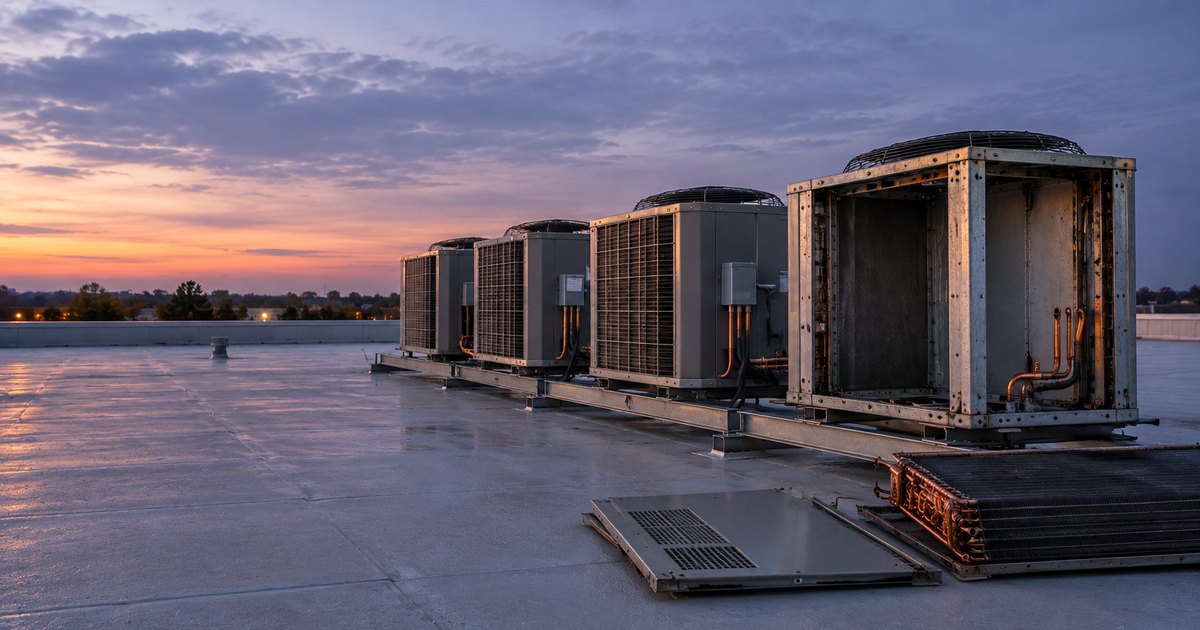
In Certain Underwriters at Lloyd’s London v. Law (5th Cir. 2009), thieves stripped the copper coils out of 17 rooftop air conditioning units on a vacant building, causing about $200,000 of damage, and the owner ultimately collected nothing.
The copper itself was worth about $2,000. The damage done to get it was about $200,000. The policy covered vandalism but excluded theft, except for damage caused by burglars breaking in or out of the building.
The trial court awarded the owners $177,150 plus attorneys’ fees, treating the destruction as vandalism. The appeals court reversed. It held that the damage was done only to get at the copper, which made it theft, and theft was excluded.
The lesson: broad form has the same gap. Theft isn’t one of its named perils, and its vandalism coverage carries a similar carve-out for theft. On a broad form policy, a stripped rooftop unit, stolen appliances in a vacant unit or copper pulled from a mechanical room are likely to fall outside the list.
Which losses fall outside broad form for apartment owners?
The losses most likely to fall outside broad form for apartment owners are theft, water that doesn’t come from a covered system or appliance, and anything else that simply isn’t named.
- Theft. Appliances taken from a unit between tenants, stolen HVAC condensers, stripped copper and stolen building materials.
- Water from outside the list. Broad form names accidental discharge from a plumbing, heating or air conditioning system or appliance. Water that enters a different way, such as melting ice backing up under shingles, may not fit that description.
- Anything nobody thought of. The value of an open-perils form is that you don’t have to predict the loss in advance.
Special form isn’t unlimited. It has its own exclusions and conditions, and theft coverage can be restricted on a building that has been vacant for more than 60 days. But the starting point is coverage, and the carrier has to point to the exclusion.
Why would anyone carry broad form?
Usually because it was cheaper at some point, the building was hard to place, or nobody revisited the form after the first year.
Some carriers offer broad form on older buildings or tougher risks rather than declining them. Sometimes it is a reasonable trade an owner made on purpose. The problem is when nobody made it on purpose. Insurance is just risk tolerance. Any of these choices can be right, as long as you understand the risk you are keeping versus the risk you are transferring.
What should you check on your policy?
Find the cause of loss form on your declarations page, confirm whether it is basic, broad or special, and ask what it would cost to move to special form.
- Read the declarations. The form is listed by name or form number next to each building and coverage. Our guide to reading a commercial declarations page shows where.
- Check each building separately. Different buildings on the same schedule can carry different forms.
- Ask about theft and vacancy. Know how the form treats theft and what changes after 60 days vacant.
- Price special form side by side. Seeing both prices next to the coverage difference is the only way to make the choice on purpose.
- Review the rest of the property program at the same time. Valuation and coinsurance, ordinance or law, and replacement cost versus actual cash value are usually where the other gaps sit.
At Avanti Group, the cause of loss form is one of the first things we check on an apartment or habitational program. The Business Risk Diagnostic™ is how we review an existing program before anything changes.
More real cases: coinsurance penalty court cases and ordinance or law claim examples. For why we push on all three, see why we push so hard on commercial property coverage.
Frequently asked questions
Is special form the same as all-risk coverage?
It is often called all-risk or open-perils coverage, but it still has exclusions, such as flood, earth movement and wear and tear. The difference is that the carrier has to show an exclusion applies.
Does broad form cover theft?
No. Theft is not one of the named perils on the standard broad form. Its vandalism coverage also generally excludes theft, other than damage caused by burglars breaking in or out.
Does broad form cover water damage?
Only certain water damage. Broad form names accidental discharge of water or steam from a plumbing, heating or air conditioning system or appliance. Water from other sources may not fit that description.
How do I know which cause of loss form I have?
It is listed on your declarations page, by name or form number, next to each building or coverage. If it says basic or broad, you are on a named-perils form.
Is special form much more expensive?
It depends on the building and the carrier. Ask for both forms to be quoted side by side so the price difference and the coverage difference are clear before you choose.
Case source
- Certain Underwriters at Lloyd’s London v. Law (5th Cir. 2009), as summarized by Rough Notes: https://roughnotes.com/rnmagazine/2009/august09/08p092.htm
This article summarizes public court records and standard policy forms for educational purposes. It is not legal advice, and coverage depends on the wording of your specific policy.